
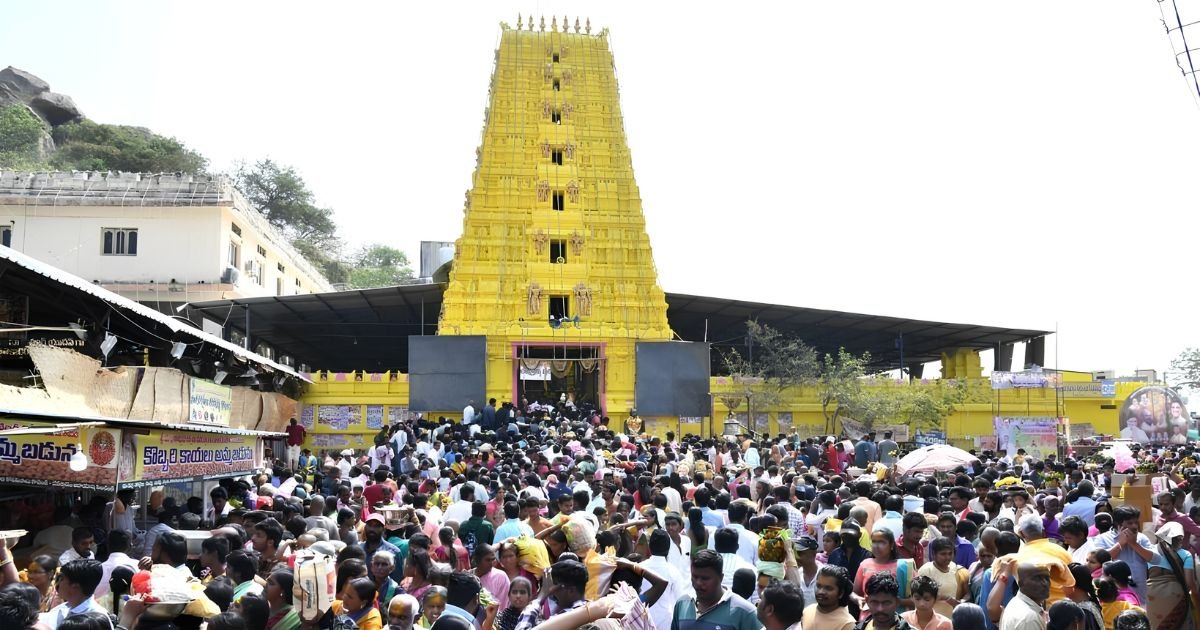

Tucked away on a quiet hillock in Telangana’s Siddipet district, the Komuravelli Mallanna Temple is one of South India’s most powerful folk pilgrimage sites. Devotees travel from across the state to seek blessings from Lord Mallanna, a fierce yet compassionate form of Shiva deeply woven into Telangana’s rural and pastoral traditions.
What sets the Komuravelli Mallanna Temple apart is its raw, unfiltered devotion. Rituals are sung in Telugu rather than Sanskrit, priests belong to folk singing communities, and centuries of faith remain unbroken. This guide covers everything you need for a smooth, meaningful visit.
Komuravelli Temple Location
The temple stands in Komuravelli village, Cherial Mandal, Siddipet district, on a small hill locally called Indrakeeladri. It sits directly along State Highway 1 (Rajiv Rahadari), the Hyderabad-Karimnagar highway, which is one reason it’s so easy to reach by road.
Approximate distances from key cities:
- Hyderabad: 85 to 95 km, depending on the exact starting point in the city
- Siddipet: 22 km
- Warangal: 100 to 110 km
- Karimnagar: 65 km
- Rajiv Gandhi International Airport, Shamshabad: around 145 km
Because the temple sits right on the highway, most pilgrims combine it with other stops along the same route rather than treating it as an isolated day trip.
Komuravelli Temple Room Booking
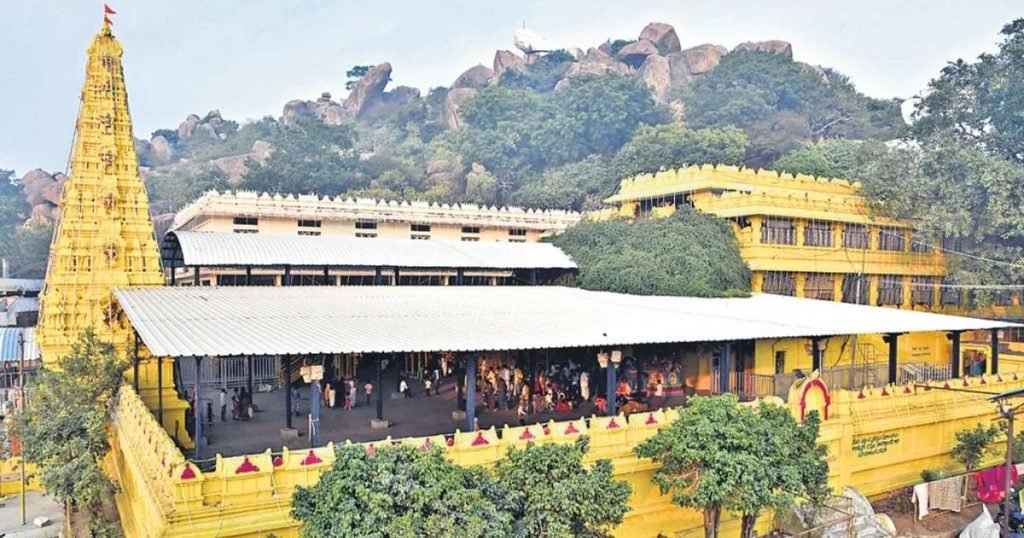
Accommodation is managed largely through the Telangana Endowments Department, which runs a set of choultries (pilgrim rest houses) around the temple complex.
- Online booking: Available through the official temple/devasthanam website for both darshan slots and room reservations
- On-site booking counter: Located near the main entrance, open roughly 8:00 AM to 5:00 PM daily
- Advance queries: Can be sent by email to the temple office (contact details below)
- Backup option: Siddipet town, just 22 km away, has budget hotels and lodges if choultries are full
If you’re planning to visit on a Sunday, during the Jatara season, or around Maha Shivaratri, book rooms well in advance. These are the highest-footfall periods of the year, and last-minute accommodation near the temple becomes extremely difficult to find.
Related Post: ISKCON Vaikuntha Hill Bangalore: Complete Visitor Guide, Timings, Darshan & Location (2026)
Kondagattu to Komuravelli Temple Distance
Many devotees combine Komuravelli with the Kondagattu Anjaneya Swamy Temple as a two-shrine pilgrimage circuit, since both lie in roughly the same direction from Hyderabad.
The road distance between the two temples is approximately 100 to 110 km, taking around 2.5 to 3 hours depending on traffic.
A typical route:
Kondagattu → Jagtial → Karimnagar → Siddipet → Gajwel → Komuravelli
This can be done by private vehicle, hired cab, or TSRTC buses with a change at Karimnagar or Siddipet. The drive itself passes through open Telangana countryside and is a scenic stretch in its own right, not just a connecting leg.
Komuravelli Temple EO Contact Number
For seva bookings, administrative queries, or general information, the temple is managed under the Sri Mallikarjuna Swamy Devasthanam office.
- Contact person: Executive Officer, Sri Mallikarjuna Swamy Devasthanam
- Address: Komuravelli village, Siddipet district, Telangana, PIN 506223
- Phone: 08710-226201
- Email: eo_smdk@yahoo.co.in
It’s best to call on weekdays between 9:00 AM and 5:00 PM for a quicker response, since lines can get busy on weekends and during festival periods.
Komuravelli Mallanna Temple Bus Route
TSRTC (Telangana State Road Transport Corporation) runs frequent services connecting Komuravelli to major nearby towns.
- From Hyderabad/Secunderabad: Direct buses along the Hyderabad-Karimnagar highway via Siddipet and Gajwel
- From Siddipet: Frequent local buses and shared autos covering the last 22 km
- From Warangal: Direct and connecting services via Siddipet
- From Jangoan: Direct buses to the temple; Jangoan is also the nearest railway station, about 45 km away
- From Karimnagar: Regular buses passing through Siddipet
Warangal and Secunderabad railway stations are the more commonly used rail gateways for out-of-state visitors, since Jangoan itself is a smaller station with limited long-distance connections. Notably, in 2024 the Telangana government laid the foundation for a new Komuravelli railway station on the Kothapalli-Manoharabad line, which should shorten this journey considerably once it’s operational.
JBS to Komuravelli Bus Timings – TSRTC Ticket Price
For devotees starting from Jubilee Bus Station (JBS) in Secunderabad, the route is straightforward.
- Early departures: Buses typically leave JBS between 5:00 AM and 7:00 AM, timed well for morning darshan
- Frequency: Multiple daily services run on the Hyderabad-Karimnagar corridor through Siddipet and Gajwel
- Travel time: Roughly 2 to 2.5 hours to the nearest stop
- Fare: Ordinary buses cost approximately ₹100 to ₹200 per person one-way for the 80 to 90 km stretch; express and AC buses cost somewhat more
- Last leg: From Siddipet or Gajwel, shared autos or local buses cover the remaining distance into Komuravelli village
Fares and schedules shift during festival season when TSRTC adds special buses, so it’s worth checking the official TSRTC site or calling the local depot before a Sunday or Jatara-period visit.
Komuravelli Temple History
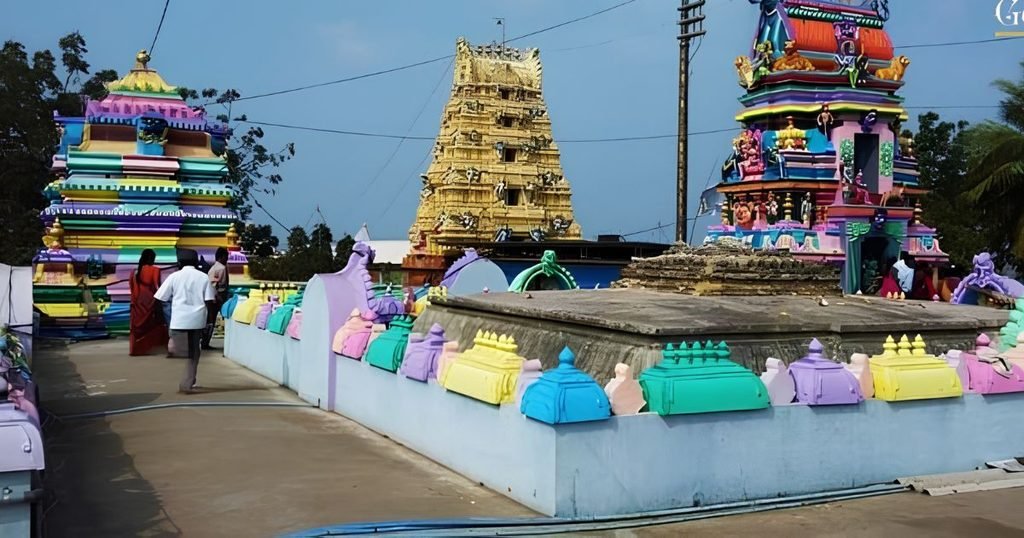
There’s no inscription, no copper plate grant, no dated stone record marking when this temple began. Its history survives instead through oral tradition, passed down through generations of Oggu Katha singers.
According to this tradition, roughly 500 years ago, a devout man named Komaranna from the Yadav community performed intense penance to Lord Shiva on this very hilltop. Moved by his devotion, Shiva is believed to have manifested before him in the form of Mallanna. Komaranna then installed the clay idol that still occupies the sanctum today, a figure roughly 8 feet tall, remarkable given its age and the fact that it has survived five centuries as unfired clay rather than stone or metal.
Over time, the Telangana Endowments Department expanded the site with mandapams, choultries, and pilgrim infrastructure. But the essential character of the temple hasn’t shifted: worship here is still conducted entirely in Telugu, a deliberate departure from the Sanskrit liturgy used at most major Hindu shrines, and one that keeps the temple deeply rooted in local, everyday language and community.
Locals also regard Mallanna as a Grama Devata, a guardian village deity believed to protect the region from illness, injustice, and misfortune, which is part of why the temple carries such strong communal significance beyond pure ritual worship.
Who Is Lord Mallanna?
Mallanna is understood as a folk incarnation of Shiva, worshipped primarily by rural, pastoral, and warrior communities across Telangana and neighbouring Maharashtra. He appears under different names depending on the region:
- Mallikarjuna Swamy in Telangana
- Khandoba in Maharashtra, where a parallel and closely related tradition exists
At Komuravelli, the idol depicts Mallanna in a fierce form: a curled mustache, a trident and damaru (hand drum) in his upper hands, and a bowl of turmeric, known as bandari, in a lower hand. Golden serpents wrap around his waist and arms, and the severed heads of the three Tripurasura demons lie at his feet, representing his victory over evil forces.
He is flanked by two consorts:
- Golla Kethamma, closely associated with shepherding communities
- Medalamma, also called Bramarambika, considered a form of Parvati
Below the main idol sits a Shiva Linga, reinforcing the connection to Shiva’s broader form. The temple complex also houses statues of Saint Renukacharya and Saint Basaveswara, along with a sacred plum tree considered auspicious by devotees.
Unique Worship Traditions and Beliefs
Few Shiva temples in India worship the way Komuravelli does, and that’s largely what draws scholars, folklorists, and devotees alike.
- Oggu Katha: Mallanna’s story exists nowhere in written scripture. It survives only through Oggu Katha, an oral performance tradition where singers, known as Oggu Pujaris, narrate his battles and divine deeds using traditional percussion instruments called oggu. These Oggu Pujaris also serve as the temple’s primary priests, a role usually reserved for Brahmin priests in mainstream Hindu temples.
- Patnam rangoli: During key rituals, Oggu Pujaris draw an elaborate rangoli called Patnam in the main hall and temple verandah, treated as a devotional offering in its own right rather than mere decoration.
- Telugu-language worship: Every mantra and ritual here is performed in Telugu, making the temple unusually accessible to local devotees who connect more directly with worship in their mother tongue.
- Turmeric offerings: Devotees commonly offer bandari, a sacred turmeric preparation, believed to bring protection and help fulfil personal vows, known locally as mokkus.
Architecture and Temple Layout
Komuravelli is a cave temple, carved directly into the natural rock of Indrakeeladri rather than built up as a freestanding structure. Its architecture reflects Telangana’s broader tradition of folk shrines: unpolished, earthy, and deeply tied to the landscape it sits within.
Key features of the layout:
- Main sanctum (Garbhagriha): Houses the 8-foot clay idol of Mallanna with his consorts
- Yellamma Temple: Located immediately adjacent to the main shrine
- Veerabhadra Cave Temple: Positioned along the descent path from the main temple
- Mandapam: The prayer hall, renovated and maintained by the Endowments Department
- Choultries: Rest houses built for pilgrims staying overnight
- Sacred plum tree: Growing within the temple premises, considered auspicious
- Entrance statues: Large figures of Saint Renukacharya and Saint Basaveswara greet visitors at the entry point
Komuravelli Jatara – The Grand Festival
The Komuravelli Mallanna Jatara ranks among Telangana’s largest folk festivals, drawing pilgrims not just from within the state but from Maharashtra and other neighbouring regions where Khandoba worship is also practiced.
The festival begins on Makar Sankranti in mid-January and runs until Ugadi, the Telugu New Year, usually falling in March or April. Every Sunday during this stretch becomes a mini-celebration in its own right, with devotees converging to offer prayers and complete vows.
Major events within the Jatara:
- Brahmotsavam: Grand ceremonial rituals that kick off the festival season on Makar Sankranti
- Pedda Patnam: The single largest gathering of the year, held on Maha Shivaratri, featuring an extended Patnam rangoli ritual and continuous prayer sessions
- Agni Gundaalu (fire walking): Held on the Sunday just before Ugadi, where devotees walk across burning coals as an act of extreme devotion and vow fulfilment
- Annual idol coloring: A once-a-year repainting of the main deity, drawing large crowds to witness the ceremony
During the Jatara, the temple functions on near round-the-clock hours to manage the surge in pilgrim numbers.
Komuravelli Temple Timings
Understanding the daily schedule in advance saves considerable waiting time, especially since the temple closes for a midday break.
| Session | Timings |
| Temple Opening | 4:30 AM |
| Morning Darshan | 6:00 AM to 12:00 PM |
| Afternoon Break | 12:00 PM to 3:00 PM |
| Evening Darshan | 3:00 PM to 7:00 PM / 8:30 PM |
| Temple Closing | 8:30 PM to 9:00 PM |
On auspicious days such as Mondays, Amavasya (new moon), and Ekadashi, the temple often opens earlier, sometimes as early as 4:00 AM, and sees noticeably heavier footfall.
Komuravelli Temple Timings on Sunday
Sundays draw the biggest regular crowds of the week, and even more so during Jatara season when every Sunday functions like a festival day. On Sundays, the temple typically stays open from 5:00 AM to 10:00 PM, with darshan organized in waves. The heaviest queues form between 5:00 and 9:00 AM and again between 4:00 and 7:00 PM. During major festival Sundays, the temple may stay open through the night.
Tickets and Sevas
Beyond general darshan, the temple offers structured sevas for devotees who want to participate in specific rituals.
- Kalyanam Seva: The celestial wedding ritual of Lord Mallanna and his consorts, conducted in scheduled slots; advance booking is recommended
- Special darshan tickets: Available at the counter for those wanting to skip the longer general queue
- Session slots typically run:
- Morning: 7:00 AM to 9:00 AM, for early blessings
- Late morning: 10:00 AM to 12:00 PM, alongside daily ritual offerings
- Afternoon: 1:00 PM to 3:00 PM, generally preferred by families
Ticket prices for sevas like Kalyanam vary by season and are best confirmed directly with the temple office or official booking counter before your visit, since rates are occasionally revised.
Dress Code and Devotee Discipline
The temple expects a certain level of decorum from every visitor.
- Attire: Traditional, modest clothing is expected. Sarees, dhotis, churidars, and kurta-pyjamas are appropriate; jeans, shorts, and sleeveless tops are discouraged
- Footwear: Not allowed inside the temple; a cloakroom is available for storage
- Photography: Strictly prohibited in the sanctum and main temple area
- Phones: Should be kept silent or switched off during prayer sessions
Facilities for Devotees
The temple trust and Endowments Department have built out a reasonable set of amenities to support the large number of daily visitors.
- Choultries for overnight stays
- Basic food stalls and eateries near the complex
- Drinking water points across the premises
- Separate queues for senior citizens, differently-abled visitors, and women with children
- Parking near the base of the hill, though it gets congested on Sundays, so arriving early helps
- Cloakroom facility for footwear
Cultural and Social Importance
Komuravelli functions as far more than a place of worship. It’s a cultural anchor for Telangana’s pastoral and agricultural communities, particularly the Kuruma (shepherd) and Yadav communities, who consider Mallanna their principal deity and remain closely involved in temple rituals and administration.
The Oggu Katha tradition performed here is increasingly recognized as a living cultural heritage practice, keeping an ancient oral storytelling form alive in an era dominated by digital media. The temple also draws devotees across caste and economic lines, creating a shared space of devotion that cuts across usual social divisions. The annual Jatara, in particular, doubles as a community festival where folk art, music, and regional food traditions come together around the same spiritual core.
Myths, Legends, and Miracles
The Oggu Katha narratives describe Mallanna, as an incarnation of Shiva, travelling on a flying horse and overcoming a series of trials set by the brothers of Goddess Medalamma as conditions for marrying her. One well-known version of the legend involves Mallanna having to procure a rare turmeric known as bandari to satisfy her brothers’ demands. He succeeds, marries Medalamma, and brings her to Komuravelli.
A parallel belief holds that Shiva first manifested as Mallanna in Malegaon, Maharashtra, before this form became established at Komuravelli, linking the temple’s story to the wider Khandoba tradition across the Deccan region.
Devotees frequently attribute personal miracles to Mallanna, ranging from recovery from serious illness to resolution of long-standing disputes and blessings for childless couples. These stories are passed along generationally rather than documented formally, and they form a large part of why devotees return year after year to fulfil mokkus (vows).
Best Time to Visit
- Peak season: Makar Sankranti to Ugadi (mid-January to March/April), the full Jatara period, with Maha Shivaratri drawing the single largest crowd for Pedda Patnam
- Auspicious regular days: Mondays, Amavasya nights, and Ekadashi, which see smaller but still meaningful crowds and a more focused spiritual atmosphere
- Quietest period: April to June, after Ugadi, ideal for a calmer, less crowded darshan
- Best weather: October to February, which also makes the hillock climb more comfortable
Nearby Attractions
- Konda Pochamma Temple: Close by, often visited on the same trip
- Yellamma Temple: Directly adjacent on the same hillock
- Kondagattu Anjaneya Swamy Temple: About 100 to 110 km away, commonly added as a second leg
- Siddipet town: 22 km away, with accommodation, food, and local shopping
- Shamirpet Lake Resort: On the Karimnagar highway, roughly 24 km from Hyderabad, useful as a stopover
Frequently Asked Questions
What is the Komuravelli Mallanna Temple famous for?
It’s known for its 500-year-old clay idol of Lord Mallanna, Telugu-language worship, Oggu Katha storytelling, and the large annual Mallanna Jatara.
What are the Komuravelli Temple timings?
The temple is open 4:30 AM to 8:30 PM daily, with a midday break from 12:00 PM to 3:00 PM; Sundays and festivals see extended hours.
How do I reach Komuravelli from Hyderabad?
TSRTC buses run from JBS via Siddipet on the Hyderabad-Karimnagar highway, covering roughly 85 to 95 km in about 2 to 2.5 hours.
What is the TSRTC ticket price from JBS to Komuravelli?
Ordinary bus fares to the nearest stops, Siddipet or Gajwel, range from around ₹100 to ₹200 per person one-way.
Is there accommodation near Komuravelli Temple?
Yes, the Endowments Department runs choultries near the temple, and Siddipet town, 22 km away, offers additional budget hotels.
What is the EO contact number for Komuravelli Temple?
The Executive Officer can be reached at 08710-226201 or via email at eo_smdk@yahoo.co.in.
What is the distance from Kondagattu to Komuravelli Temple?
The two temples are approximately 100 to 110 km apart by road, roughly a 2.5 to 3-hour drive.
Is photography allowed inside Komuravelli Temple?
No, photography is strictly prohibited inside the main temple and sanctum area.
What is Oggu Katha at Komuravelli Temple?
It’s an oral folk performance tradition where Oggu Pujari singers narrate Mallanna’s story using percussion instruments, serving as both worship and history.
When is the Komuravelli Mallanna Jatara celebrated?
It runs from Makar Sankranti in mid-January through Ugadi in March or April, with Pedda Patnam on Maha Shivaratri as its peak.
Conclusion
Komuravelli Mallanna Temple isn’t a shrine you visit just to check off a list. It’s a living record of Telangana’s folk faith, carried forward through song rather than scripture, through community rather than institution. From the fierce, turmeric-covered form of Mallanna to the fire-walking devotion of Agni Gundaalu, everything about this temple points back to centuries of unbroken belief.
Whether you’re heading there for a quiet Monday darshan or joining the crowds during the Jatara, planning around the timings, routes, and rituals in this guide will make the visit smoother, and let you spend more of your time simply being present at one of Telangana’s most heartfelt pilgrimage sites.

Wei Zhang is the admin of Magazinereflex.com, a travel-focused website dedicated to exploring destinations, sharing travel tips, and inspiring memorable adventures. With a passion for discovering new places and learning about different cultures, Wei Zhang aims to provide readers with helpful travel guides, destination insights, and practical advice to make their journeys more enjoyable. His goal is to inspire travelers to explore the world with confidence and curiosity.
