
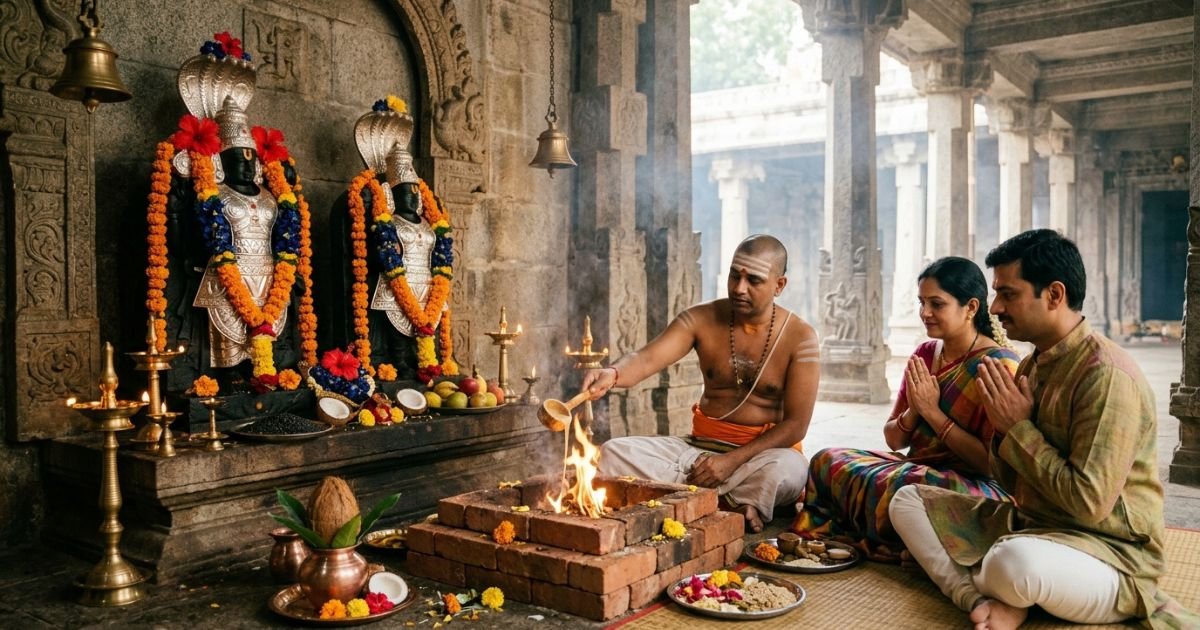

Rahu Ketu Pooja is a Vedic ritual performed to calm the effects of Rahu and Ketu, the two shadow planets in Hindu astrology. It is most often done to reduce Rahu Ketu Dosha, Kaal Sarpa Dosha and Sarpa Dosha, which are linked to delayed marriage, career blocks, financial stress and restless thoughts.
The most famous place to perform it is the Sri Kalahasti Temple in Andhra Pradesh. This guide explains what the pooja does, why Kalahasti is special, how the ritual runs, when to go, and what to expect, in plain language.
️ Quick Facts: Rahu Ketu Pooja Overview
| Detail | Information |
| Ritual name | Rahu Ketu Pooja, also called Rahu Ketu Dosha Nivarana Pooja or Sarpa Dosha Nivarana Pooja |
| Main purpose | To reduce the effects of Rahu Dosha, Ketu Dosha, Kaal Sarpa Dosha and Naga Dosha |
| Best known location | Sri Kalahasti Temple, Tirupati district, Andhra Pradesh, India |
| Temple element | Vayu (air), one of the five Pancha Bhoota Sthalams |
| Deity | Lord Shiva as Sri Kalahasteeswara and Goddess Gnanaprasunambika |
| Best time | Rahu Kalam, Amavasya, Pournami, Ashlesha Nakshatra, and eclipse days |
| Who can perform it | Individuals or couples, present in person at the temple |
| Usual duration | About 25 minutes for the ritual, plus queue time (often 1 to 2 hours in total) |
| What you receive | Prasadam and, in many ticket categories, vastra bahumanam |
| Ticket prices | Several tiers exist and revisions happen, so confirm at the temple counter on the day |
Introduction: The Shadow Planets and Human Life
Most planets in Vedic astrology are visible bodies in the sky. Rahu and Ketu are different. They are the two points where the Moon’s path crosses the Sun’s path, known in astronomy as the lunar nodes. They have no physical form, yet astrologers have studied their influence for centuries.
Rahu is linked with desire, ambition, illusion and sudden change. Ketu is linked with detachment, past life memory and spiritual search. Together they pull a person in two directions at once: toward the world and away from it.
When these two sit badly in a birth chart, people often describe the same pattern. Good efforts stall. Marriage gets delayed. Money comes and goes. The mind feels foggy or anxious for no clear reason. Many families then ask an astrologer for a remedy, and Rahu Ketu Pooja is one of the most common answers.
This article covers the meaning of the dosha, the temple tradition, the ritual steps, timing, benefits, warning signs and practical tips. It also gives an honest view of what astrology can and cannot promise, so you can decide with clear eyes.
1. Meaning of Rahu & Ketu Dosha
A dosha in Jyotisha (Vedic astrology) is a planetary condition believed to create difficulty in specific areas of life. Rahu Ketu Dosha is the term used when Rahu or Ketu sits in a position that disturbs the chart.
The legend behind Rahu and Ketu
According to the Puranic story, a demon named Svarbhanu disguised himself and drank a few drops of the nectar of immortality during the churning of the ocean. The Sun and Moon spotted him and told Lord Vishnu, who severed his head. The head became Rahu and the body became Ketu. Because he had tasted the nectar, both parts lived on, and tradition says they chase the Sun and Moon, causing eclipses.
Related Post: Best Time to Perform Rahu Ketu Pooja for Maximum Results
Common forms of this dosha
- Rahu Dosha: Rahu is placed in a house or sign that creates confusion, obsession, sudden loss or unusual delays.
- Ketu Dosha: Ketu is placed so that it brings detachment, isolation, lack of focus or unexplained fears.
- Kaal Sarpa Dosha: All seven classical planets (Sun, Moon, Mars, Mercury, Jupiter, Venus, Saturn) sit on one side of the Rahu Ketu axis in the birth chart.
- Sarpa Dosha and Naga Dosha: Conditions linked to serpent symbolism, often connected in family tradition to ancestral or karmic causes.
Types of Kaal Sarpa Dosha
Astrologers describe twelve types, named by the house where Rahu sits: Anant, Kulik, Vasuki, Shankhapal, Padma, Mahapadma, Takshak, Karkotak, Shankhnaad, Patak, Vishakt and Sheshnag. Each is said to affect different parts of life, such as the self, wealth, courage, home, children, health, marriage or career.
An honest note on Kaal Sarpa
Many popular websites present Kaal Sarpa as a fixed doom. Scholars do not agree on this. The concept is not found in classical texts such as Brihat Parashara Hora Shastra, and it appears to have grown popular in later centuries. Some astrologers treat it as very important. Others reject it. A balanced view is to treat it as one factor among many in a chart, not as a final verdict on your life.
Also note that the dosha is considered cancelled or weakened if even one planet sits with Rahu or Ketu, or if a strong benefic planet such as Jupiter aspects the axis. This is why a full chart reading by a qualified astrologer matters before you assume you have the dosha.
2. Why Sri Kalahasti Temple Is the Best for This Pooja
Rahu Ketu Pooja is performed at many temples across India, and several Durga and Shiva temples have added it as a seva. Even so, Sri Kalahasti remains the first name most devotees mention. Here is why.
The Vayu Lingam and Pancha Bhoota Sthalam
Sri Kalahasti is one of the five Pancha Bhoota Sthalams, the temples that represent the five elements. Kalahasti represents Vayu, the air element. Devotees note that a lamp inside the sanctum flickers constantly even though there is no visible air movement. The temple’s Lingam is a self manifested white Lingam, known as the Vayu Lingam.
The eclipse tradition
Most temples close during a solar or lunar eclipse. Sri Kalahasti is widely known to stay open, and special abhishekam and shanti poojas are performed during the eclipse period. Because Rahu and Ketu are tied to eclipses, this is seen as a strong sign of the temple’s bond with them.
Lord Shiva and the shadow planets
Tradition holds that Lord Shiva granted liberation to Rahu and Ketu at this sacred place. For that reason, worship of the two planets here is part of Shiva worship itself. This is why many devotees feel the ritual carries added meaning here.
Practical strengths
- Poojas run through most of the day, so you do not need to fit one narrow window.
- Several ticket categories and pooja locations are available.
- Temple priests guide you through each step.
- The temple is about 36 km from Tirupati, which makes it easy to combine with a Tirumala visit.
Other temples that offer the ritual
If travel to Andhra Pradesh is not possible, Trimbakeshwar near Nashik is another well known place for Kaal Sarpa shanti. Some Durga temples, such as Kanaka Durga Temple in Vijayawada, also offer a Rahu Ketu puja. Several Hindu temples abroad hold monthly Rahu Ketu or Naga Devatha pujas as well. Pick the place that matches your faith and your practical situation.
️ 3. Spiritual Importance of Rahu Ketu Pooja
The ritual is about more than a planetary fix. Its spiritual meaning is what keeps it relevant for sincere devotees.
Balancing desire and detachment
Rahu stands for wanting more. Ketu stands for letting go. A healthy life needs both. The pooja is a reminder to pursue goals with effort while holding them with a calm mind.
Turning to Shiva
In Hindu tradition, Shiva as Nilakantha swallowed the poison that rose from the ocean and held it in his throat. Devotees see him as the one who can absorb what is toxic without being harmed. Offering prayers to Rahu and Ketu through Shiva is a way of asking for steadiness.
Acceptance of karma
Astrology links dosha to past actions and present habits. The pooja does not erase responsibility. It is an act of humility and a fresh start, which many people find emotionally useful no matter how they view astrology.
The role of faith
Results in rituals are felt through belief, discipline and conduct. Devotees who combine the pooja with honest work, kindness and regular prayer usually report a stronger sense of benefit than those who treat it as a quick transaction.
4. Step-by-Step Overview
The exact flow can differ by ticket type and priest, but most devotees follow this pattern. Treat it as a general guide and follow the instructions given at the temple on the day.
- Reach the temple early. Queues build up, especially on weekends, Mondays and festival days.
- Buy your pooja ticket at the temple counter. You must be physically present. The ticket is valid only for the day of purchase.
- Choose the ticket category. Several categories exist, with different locations inside or around the temple premises.
- Keep your details ready. The priest will usually ask for the names of family members and your nakshatra (birth star).
- Wash your hands and feet. Many devotees do this at the water points near the pooja mandap as a symbol of cleansing.
- Collect the pooja items. The ticket normally includes the materials, so you do not need to buy extras from stalls outside.
- Sit in the allotted spot. The pooja is done as a single person or as a couple.
- Follow the priest. As the priest chants mantras, you offer flowers and coloured powder to the metal forms of Rahu and Ketu, and you may offer milk as directed.
- Complete the sankalpa. Silently state your prayer or intention with a calm mind.
- Receive prasadam. After the ritual you get prasadam and, in many categories, a cloth offering.
- Visit the Vayu Lingam and the Goddess shrine. Many devotees complete the day with darshan of Lord Kalahasteeswara and Goddess Gnanaprasunambika.
- Sit quietly for a few minutes. Reflect, give thanks and keep your mind still.
Items and conduct to remember
- Bathe before going and wear clean, modest, traditional clothes.
- Avoid non vegetarian food on the day of the pooja.
- Keep prasadam and any small idols safe and do not misplace them.
- Do not buy pooja materials from outside sellers, since the temple provides what is needed.
- Tip only within reason, and only to the priest who performs the ritual if you wish.
- Keep mobile phones quiet and avoid photography where it is not allowed.
5. Ideal Time to Perform Rahu Ketu Pooja
Best time of the day: Rahu Kalam
Rahu Kalam is a roughly 90 minute window each day considered ruled by Rahu. It is worked out by dividing the time between sunrise and sunset into eight equal parts and taking the part assigned to that weekday. Many temple guides suggest performing the pooja during this window because the focus is on Rahu.
If sunrise is near 6:00 AM and sunset near 6:00 PM, the usual pattern is:
| Day | Approximate Rahu Kalam |
| Monday | 7:30 AM to 9:00 AM |
| Tuesday | 3:00 PM to 4:30 PM |
| Wednesday | 12:00 PM to 1:30 PM |
| Thursday | 1:30 PM to 3:00 PM |
| Friday | 10:30 AM to 12:00 PM |
| Saturday | 9:00 AM to 10:30 AM |
| Sunday | 4:30 PM to 6:00 PM |
Sunrise changes with season and place, so check a trusted panchang for the exact timing on your travel date.
Best days and occasions
- Sundays and Tuesdays, which many guides recommend
- Mondays, which add Shiva worship value
- Amavasya (new moon) and Pournami (full moon)
- Ashlesha Nakshatra days
- Solar and lunar eclipse days, which are special at Kalahasti
- Chaturthi and Panchami tithis, according to some temple sources
Some devotees also repeat the pooja twice a year, once in Dakshinayanam and once in Uttarayanam.
A timely note for 2026
According to the Vedic (sidereal) calendar, Rahu and Ketu are expected to change signs around early December 2026. Many astrologers say a change of sign is a natural moment to review your chart. If you plan a pooja before or after this shift, speak to your astrologer about whether it changes the advice for your birth chart.
Practical timing tips
- The temple often runs the poojas from early morning to evening, but timings can change on festival days. Confirm with the temple before you travel.
- Arrive on a weekday morning for shorter queues.
- Avoid peak days such as Maha Shivaratri unless you plan carefully.
6. Major Benefits of Rahu Ketu Pooja
Devotees and astrologers describe the following benefits. These are matters of belief and tradition, and results vary from person to person.
Removes Rahu-Ketu Dosha
The core purpose is to reduce the troubling effects of Rahu and Ketu in the birth chart. People with Rahu Dasha, Ketu Dasha, Kaal Sarpa Yoga or Naga Dosha often choose this pooja as a first remedy. Many report a sense that heavy, repeating obstacles begin to ease.
Brings Harmony in Marriage & Relationships
Delayed marriage, repeated broken proposals and tension between partners are among the most common reasons people visit Kalahasti. Couples who face difficulty in having children also perform the ritual together. The calm and shared prayer can help partners feel more united.
Boosts Career and Financial Growth
When Rahu is troubled, people describe sudden job changes, stalled promotions or business losses. The pooja is believed to clear these blocks. Devotees often pair it with real steps such as skill building and sensible budgeting, which tends to give the best results.
Promotes Mental Peace and Spiritual Stability
Rahu is tied to anxiety, fear and restless thinking. Many devotees say the quiet atmosphere of the temple, the chanting and the act of surrender give them a real sense of lightness. Even for those who are cautious about astrology, the calming effect of ritual and reflection is widely noted.
Offers Karmic Relief & Spiritual Progress
The pooja is also seen as a way to settle karmic debts and move forward with a clearer conscience. Combined with charity, honest conduct and regular prayer, it can mark the start of a more disciplined spiritual life.
Signs You Should Perform Rahu Ketu Pooja
Only a qualified astrologer can confirm this after studying your chart. Still, people often consider the pooja when they notice:
- Marriage delays or repeated rejections without clear reasons
- Trouble conceiving or recurring family obstacles
- Sudden career setbacks or unstable income
- Constant fear, anxiety, nightmares or confusion
- Ongoing Rahu Dasha, Ketu Dasha or Antardasha periods
- A birth chart showing Kaal Sarpa Yoga or Naga Dosha
- Repeated health problems that medical tests cannot fully explain
- A feeling that effort never converts into results
Important: Ongoing physical or mental health problems need proper medical care. A pooja can be a spiritual support but should never replace a doctor’s advice or therapy.
Devotee Tips
- Consult a trusted astrologer first. Confirm that the dosha actually exists in your chart.
- Verify details before travelling. Pooja timings, ticket prices and rules are revised from time to time, so check with the temple office on the day of your visit.
- Carry valid ID and basic details. Keep your name, nakshatra and family names ready.
- Dress modestly. Traditional clothes are preferred at the temple.
- Plan for waiting time. Carry water and be patient, especially on weekends.
- Be careful with middlemen. Buy tickets only at official counters.
- Pair the ritual with practice. Chant “Om Namah Shivaya”, recite Rahu or Ketu mantras as advised by your astrologer, and donate according to your means.
- Keep your expectations realistic. Treat the pooja as a spiritual step, not a guaranteed outcome.
- Visit the main shrine. Complete the day with darshan of the Vayu Lingam.
️ Spiritual Insight
Rahu and Ketu are often called the planets of illusion and liberation. They show us two truths. We chase things because we feel incomplete, and we find peace when we stop chasing blindly.
Seen this way, Rahu Ketu Pooja is not only a way to push away bad luck. It is a practice of humility. You come to a quiet place, you hold your fears in front of Shiva, and you choose to start again with a lighter mind.
For many devotees, that change of mind is the real gift of the visit.
Conclusion
Rahu Ketu Pooja is one of the best known remedies in Vedic tradition for calming the effects of the shadow planets. At Sri Kalahasti, it carries added weight because of the temple’s link with Lord Shiva, the Vayu Lingam and the eclipse tradition.
To get the most from it, confirm your chart with a trusted astrologer, choose a suitable day such as Rahu Kalam or Amavasya, follow the temple’s guidance, and keep your conduct honest and disciplined afterwards. Check current timings and ticket details directly with the temple before you travel.
Approach it with faith, patience and a clear mind, and the visit is likely to leave you calmer even before any results appear.
FAQ’s
What is Rahu Ketu Pooja?
It is a Vedic ritual performed to reduce the negative effects of Rahu and Ketu in a person’s horoscope. It is often done for Rahu Ketu Dosha, Kaal Sarpa Dosha and Sarpa Dosha.
Why is Sri Kalahasti Temple famous for Rahu Ketu Pooja?
It is believed that Lord Shiva granted liberation to Rahu and Ketu here, and the temple stays open during eclipses. These traditions make it the most sought after place for this ritual.
What is the best day for Rahu Ketu Pooja at Kalahasti?
Sundays, Tuesdays and Mondays are popular, and Rahu Kalam is considered the ideal time of day. Amavasya, Pournami and eclipse days are also seen as strong occasions.
How long does the Rahu Ketu Pooja take?
The ritual itself takes about 25 minutes. With queues and temple darshan, plan for 1 to 2 hours or more on busy days.
Can I book Rahu Ketu Pooja online?
Many travel sites offer proxy bookings, but traditional guidance says you should perform the pooja in person and use the ticket on the same day. Check the temple’s official channels for current rules.
Can Rahu Ketu Pooja be done for another person?
Some devotees request the pooja on behalf of family members who cannot travel. Ask the temple office what is allowed in your case.
How much does Rahu Ketu Pooja cost at Sri Kalahasti?
Several ticket categories exist at different prices, and the temple has revised the entry level ticket in the past. Confirm the current amount at the official counter.
Is Rahu Ketu Pooja the same as Kaal Sarpa Dosha Pooja?
They are closely related and often done together at Kalahasti. Kaal Sarpa refers to a specific chart pattern, while Rahu Ketu Pooja covers broader Rahu and Ketu related concerns.
Can unmarried people perform Rahu Ketu Pooja?
Yes. Single devotees can perform it, and many unmarried people do so to seek relief from delays in marriage.
Should I repeat the pooja?
Some devotees repeat it once or twice a year. Your astrologer can advise based on your chart.
Does Rahu Ketu Pooja guarantee results?
No ritual can promise a fixed outcome. Many devotees report peace and progress, but results depend on faith, effort and your overall circumstances.
What should I wear for the pooja?
Wear clean, modest, traditional clothes. Bathe beforehand and avoid non vegetarian food that day.
Can women perform Rahu Ketu Pooja during periods?
Temple customs generally advise against entering during menstruation. Many families choose another suitable day, so follow your family tradition and temple guidance.
Do I need to consult an astrologer before the pooja?
It is strongly advised. An astrologer can check whether Rahu Ketu Dosha or Kaal Sarpa Dosha is truly present and suggest the right timing.
What is the best time to do Rahu Ketu Pooja in 2026?
Choose Rahu Kalam on a Sunday, Monday or Tuesday, or an Amavasya or eclipse day. Ask your astrologer about the Rahu Ketu sign change expected in December 2026.

Wei Zhang is the admin of Magazinereflex.com, a travel-focused website dedicated to exploring destinations, sharing travel tips, and inspiring memorable adventures. With a passion for discovering new places and learning about different cultures, Wei Zhang aims to provide readers with helpful travel guides, destination insights, and practical advice to make their journeys more enjoyable. His goal is to inspire travelers to explore the world with confidence and curiosity.
