
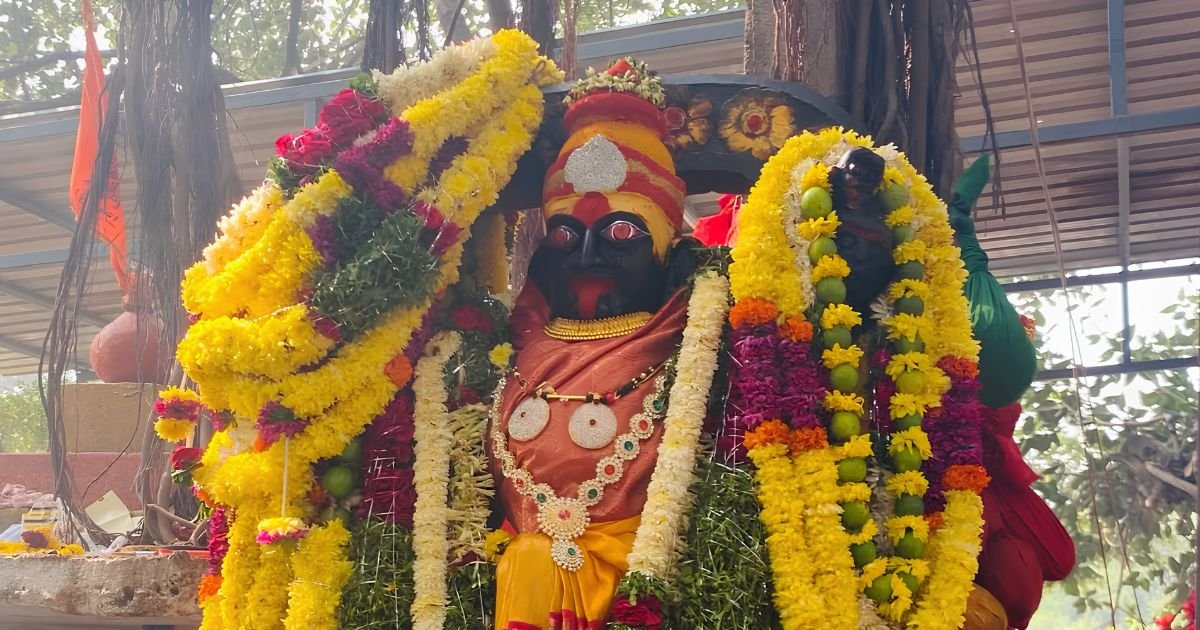

The Falaknuma Kali Mata Temple Hyderabad is one of the most spiritually charged Shakti shrines tucked inside the historic lanes of Old Hyderabad. Dedicated to Goddess Kali, it draws devotees seeking protection, courage and relief from personal hardship. Unlike grand royal temples, its power comes from decades of genuine community devotion rather than architectural scale.
Visitors travel from across Hyderabad and nearby districts to experience its intense yet nurturing atmosphere, especially during evening aarti and Amavasya worship. This guide covers the temple’s history, rituals, timings and complete darshan details, helping first time visitors plan a meaningful and well informed visit.
Falaknuma Kali Mata Temple
In the busy lanes of Hyderabad’s Old City stands a shrine devotees describe less as a tourist stop and more as a personal refuge. The Falaknuma Kali Mata Temple, near Falaknuma Railway Station, is dedicated to Goddess Kali, the fierce yet motherly form of Shakti worshipped for protection, courage and the removal of negative forces.
The temple’s story grew from ordinary faith rather than royal patronage, and that grassroots origin is part of why residents feel such a personal bond with it. Word of its spiritual intensity has spread well beyond Falaknuma itself, drawing devotees from across Hyderabad and neighbouring districts.
Historical Background of Falaknuma Kali Mata Temple
There is no single officially recorded founding date for the temple, so any claim of an exact year should be treated as local tradition rather than documented fact. What is consistently passed down is that the shrine began sometime in the twentieth century, established by a small group of devoted Kali worshippers in the Falaknuma locality after reports of unusual spiritual experiences at the site.
Over the following decades, community members and local philanthropists funded gradual expansions, turning a modest shrine into the temple complex seen today. Its position near a major railway junction also helped it become known to travellers and traders passing through, adding to its reputation as a place where prayers are answered quickly.
Related Post: ISKCON Vaikuntha Hill Bangalore: Complete Visitor Guide, Timings, Darshan & Location (2026)
Presiding Deity – Goddess Kali Mata
The presiding deity is Goddess Kali, one of the most powerful forms of Adi Shakti in Hindu tradition, typically shown with a dark complexion, a protruding tongue and symbols representing the destruction of evil and ignorance. At Falaknuma, the idol is worshipped daily with flowers, turmeric, vermilion and traditional offerings that devotees believe keep her energy active and responsive.
Visitors often note how personal the darshan feels here compared to larger, more formal temples. Rather than a distant ceremonial glimpse, worshippers frequently speak directly to the Goddess about specific problems, whether illness, family conflict, financial stress or fear of negative energy.
Spiritual Significance of Kali Worship
Kali worship is among the oldest continuous traditions within Shaktism, the branch of Hinduism centred on the divine feminine. She is regarded as the force of time itself, dissolving what no longer serves a person’s life so that renewal becomes possible, which is why devotees turn to her especially in situations that feel stuck or hopeless.
At Falaknuma, this belief translates into practical faith. Many devotees say they come here specifically when other forms of prayer have not brought relief, seeking protection from evil eye, jealousy or unexplained misfortune, and they say honesty in prayer matters more than ritual perfection.
Architecture and Temple Structure
The temple’s architecture is modest compared to the grand Dravidian or Nagara style shrines of South India, and that simplicity reflects its community built origins rather than royal design. The main sanctum, or garbhagriha, houses the primary Kali idol, with a covered assembly area where devotees sit during aarti and bhajans.
Smaller subsidiary shrines within the complex are dedicated to other deities commonly worshipped alongside Kali, such as Hanuman and various local guardian deities. Bright red and yellow tones dominate the interiors, along with garlands, oil lamps and the smoke of incense, creating an atmosphere that feels lived in rather than museum like.
Falaknuma Kali Mata Temple Timings
The temple follows a two session daily schedule, opening in the morning and again in the evening, with slightly extended hours on Fridays, Amavasya and major festivals. Exact closing times can vary by a small margin depending on the day and the size of the crowd, so checking locally before a festival visit is sensible.
| Day or Occasion | Morning Session | Evening Session |
| Regular Days | 6:00 AM to 12:30 PM | 4:30 PM to 9:00 PM |
| Fridays | 6:00 AM to 1:00 PM | 4:00 PM to 9:30 PM |
| Amavasya | 5:30 AM to 1:30 PM | 4:00 PM to 10:00 PM |
| Festivals (Navaratri, Kali Puja, Bonalu) | Extended through the day | Extended through the day |
Daily Poojas and Rituals
Each day at the temple follows a structured rhythm of worship, beginning with a morning abhishekam and decoration of the deity, followed by regular aarti sessions through the day. The most attended ritual is the evening Maha Harathi, usually performed between 6:30 PM and 7:30 PM, when the temple is at its most crowded and devotionally charged.
Devotees can also arrange personal poojas for specific needs, such as removal of obstacles, protection from negative energy or blessings for health and family matters. Priests at the temple guide first time visitors on the correct offerings and the appropriate donation for these customised rituals.
Major Festivals Celebrated
Festival days transform the temple into a hub of colour, music and continuous worship, drawing far larger crowds than an ordinary weekday. Navaratri and Kali Puja are the most significant, with extended hours, special decorations and nightly cultural programs that continue for several days.
Bonalu, the popular Telangana festival honouring the mother goddess, is also celebrated with great enthusiasm here, along with regular Friday worship that many devotees treat as a mini festival in itself. Visitors planning a festival trip should expect long queues and should arrive well before the peak evening hours.
Importance of Amavasya at Kali Mata Temple
Amavasya, the no moon night, holds special significance in Kali worship because this lunar phase is traditionally associated with heightened spiritual energy and with Kali’s own symbolism of darkness and transformation. On this day, the temple opens earlier and closes later than usual to accommodate devotees seeking her blessings.
Many visitors specifically choose Amavasya for remedies related to negative energy, black magic fears or long standing personal obstacles, believing the Goddess is most accessible on this night. Special poojas are often conducted during this period, and it is one of the busiest days of the temple’s calendar.
How to Reach Falaknuma Kali Mata Temple
The temple is located on Falaknuma Railway Station Road in Quadri Chaman Colony, making the adjacent Falaknuma MMTS railway station the most convenient landmark for travellers arriving by train. From the station, the temple is only a short walk or a quick auto rickshaw ride away.
For those using the Hyderabad Metro, it is worth knowing that the Green Line’s extension to Falaknuma is still under construction as part of Metro Phase 2, so there is currently no operational metro station directly at Falaknuma. The nearest functioning metro stop is MGBS (Mahatma Gandhi Bus Station) on the Green Line, from where devotees typically take a cab or auto for the remaining stretch into the Old City.
Best Time to Visit
Early morning, right after the temple opens at 6:00 AM, is widely considered the best time for a peaceful darshan, since the crowds are thinner and the atmosphere calmer. Evenings are more vibrant, especially around the Maha Harathi, but they also draw the largest number of visitors.
Weekdays outside of Friday tend to be far less crowded than Fridays, Amavasya or festival periods, which suits devotees who prefer a quiet, unhurried visit. Those specifically seeking the temple’s more intense spiritual atmosphere often choose Fridays or Amavasya despite the larger crowds.
Dress Code and Temple Guidelines
Modest, traditional attire is expected at the temple, with shoulders and knees covered as a sign of respect toward the deity and fellow devotees. Footwear must be removed before entering the main shrine area, and it is customary to maintain a quiet, respectful tone throughout the premises.
Photography rules can vary depending on the day and the priests on duty, so it is best to check signage or ask before taking pictures near the sanctum. Devotees are also encouraged to avoid loud conversation or phone use inside the inner worship area out of consideration for others in prayer.
Beliefs and Devotee Experiences
Many regular visitors describe the temple as a place where prayers feel answered with unusual speed, particularly requests related to protection, courage and relief from prolonged hardship. Personal accounts shared within the local community often mention a sense of calm or clarity after visiting, even when the underlying problem has not yet been resolved.
This reputation has built organically through word of mouth rather than marketing, which is part of what gives the temple its credibility among long time residents of the Old City. First time visitors are often struck by how sincerely devotees speak about their experiences here compared to more commercialised pilgrimage sites.
Nearby Temples and Attractions
Falaknuma’s Old City location places the temple within easy reach of several other landmarks worth combining into a single visit. The historic Falaknuma Palace, once a Nizam era royal residence and now a luxury heritage hotel, sits nearby and offers a striking contrast between royal history and grassroots devotion.
Other nearby points of interest include the Charminar, Chandrayangutta’s local markets and several smaller neighbourhood shrines that are part of the wider Shakti worship tradition in Old Hyderabad. Visitors with a full day to spare often pair a morning temple visit with an afternoon exploring these historic sites.
Why Falaknuma Kali Mata Temple Is Spiritually Powerful
Devotees consistently point to the temple’s atmosphere, rather than its size or architecture, as the source of its spiritual power. The concentration of daily worship, the intensity of the evening aarti and the temple’s long standing role as a place of last resort for troubled devotees all contribute to its reputation.
This power is also reinforced by continuity. Generations of the same families have worshipped here, passing down both the rituals and the personal stories that keep the temple’s spiritual identity alive in the collective memory of the neighbourhood.
Frequently Asked Questions
What is the Falaknuma Kali Mata Temple famous for?
It is known for the powerful worship of Goddess Kali, especially for protection from negative energy and relief from personal hardship.
What are the temple timings?
The temple is generally open from 6:00 AM to 12:30 PM and 4:30 PM to 9:00 PM daily, with extended hours on Fridays and Amavasya.
Is there an entry fee at Falaknuma Kali Mata Temple?
No, entry is free, though devotees may choose to pay for optional personal poojas.
Which festivals are celebrated at this temple?
Navaratri, Kali Puja and Bonalu are the major festivals, alongside special Friday and Amavasya worship.
How do I reach Falaknuma Kali Mata Temple by metro?
The Falaknuma metro station is still under construction, so the nearest operational stop is MGBS on the Green Line, followed by a short cab or auto ride.
Why is Amavasya important at this temple?
Amavasya is considered a time of heightened spiritual energy, making it especially significant for Kali worship and remedies.
What special poojas are available at the temple?
Devotees can arrange personalised poojas for protection, obstacle removal and family blessings through the temple priests.
What is the nearest railway station to the temple?
Falaknuma MMTS railway station is right next to the temple, making it the most convenient way to arrive by train.
Conclusion
The Falaknuma Kali Mata Temple may not carry the grandeur of ancient Shakti Peethas, but its strength lies in the depth of everyday devotion it inspires. For anyone visiting Hyderabad’s Old City, a stop here offers a genuine glimpse into how faith is lived, not just displayed, and why so many devotees return to this modest shrine whenever life feels difficult.

Wei Zhang is the admin of Magazinereflex.com, a travel-focused website dedicated to exploring destinations, sharing travel tips, and inspiring memorable adventures. With a passion for discovering new places and learning about different cultures, Wei Zhang aims to provide readers with helpful travel guides, destination insights, and practical advice to make their journeys more enjoyable. His goal is to inspire travelers to explore the world with confidence and curiosity.
